

12 Ways To Improve Your Motivation

Some days motivation is there, and some days it's just not. If you've clicked on this article, you probably know that feeling — like it's slipping through your hands like sand. Let's talk about why that happens, and what we can do about it from a holistic perspective.

Part One: Shift Your Mindset
1. Balance Your Parts
If you're reading this article hoping to be productive all the time, let's set some realistic expectations. That's not going to happen — and as a therapist, I'll tell you for free that it's not healthy to aim for it. Whether you know anything about IFS therapy or not, know that we all have different parts, and you may have a part of you that likes to get things done and another, equally important part that desires rest. Honor both of those parts and teach them how to coexist. Sometimes you will need rest even when you feel like you should be productive. We are human, not robots. Meet yourself where you are.
Many of us want to learn how to push ourselves harder, but we never learn when to take our foot off the gas. You can't have one without the other. You can try, but you'll burn out, hit a wall, and need a copious amount of rest just to get back to baseline. The choice, as always, is yours.

2. Take Baby Steps to Manage Overwhelm
When you want to do something but just can't, it's usually not a motivation problem — it's a capacity problem. If a task feels too big for your brain, but there isn't enough gas in the tank, your brain may not even let you start. It doesn't matter how big the task actually is; if it requires more from you than you have to give in that moment, good luck getting started.
Break the task down into smaller pieces. Sometimes starting is the hardest part, and you may accomplish more than you think. Even if you don't, a little progress is better than none. And stop judging yourself — it won't help. If you "should" be able to do something but can't, "shoulding" on yourself isn't going to change that. Practice some radical acceptance and meet yourself where you're at, without judgment.
3. Recruit an Accountability Partner
You've probably heard this before, but it's true: when someone is depending on you to do something, it can be twice as motivating. Sometimes it's easier to let ourselves down than to let someone else down. Tell someone about your goals so they can check in with you, or find someone to do it alongside you — as a body double, or for some friendly competition and encouragement.

4. Set SMART Goals — Specific, Measurable, Achievable, Relevant, and Time-Bound
Be specific about your goals. Vague goals leave you unsure what you're working toward or how to know when you've achieved them. "Being healthier" isn't specific — put a number to it so you can measure your progress. How many times a week do you want to work out to feel healthier? How many times are you working out now?
Your goal also has to feel achievable, or you'll fall off within a few weeks. Working out every day sounds nice, but consider everything else going on in your life — work, family, energy. If you're not working out at all right now, three or four times a week might be a more sustainable target than daily.
Your goal should be relevant to your life, with a real reason behind it. Setting a goal just because it's January won't carry you far. Setting one because your doctor flagged your cholesterol, or because you've learned movement supports your mental health, gives you something to actually stick with. Finally, put a time limit on it — a light at the end of the tunnel that keeps you oriented and motivated. Be SMART about your goals, or you'll set yourself up to lose motivation before you get there.
Part Two: Listen to Your Body
5. Create a Zone
Looking at motivation from a purely behavioral angle for a moment: you might be unknowingly confusing your brain about when it's time to work and when it's time to rest. Our brains love predictability and pattern recognition. If you do work in the same place you rest or play, you may be crossing your own wires. If you want to improve your sleep, don't work or scroll on your phone in bed. If you want to improve your motivation, don't do something fun in the same place you work.

6. Improve Your Nutrition
What you eat directly impacts your mood and mental health through the gut-brain connection. When your gut isn't happy, your brain isn't happy, and vice versa. It's not even about eating "healthier" — it's about eating more intentionally.
Foods known to support mood and cognitive function include those rich in omega-3s (salmon, walnuts, flaxseed), complex carbohydrates that provide steady energy, fermented foods that support gut health (yogurt, kimchi, sauerkraut), and foods high in B vitamins and magnesium, like leafy greens and whole grains. Highly processed foods and excess sugar, on the other hand, can spike your blood sugar and set you up for the crash that tanks your motivation an hour later.
You don't need to overhaul your diet overnight. Start by adding something nourishing rather than fixating on what to cut out.

7. Fix Your Sleep
I mean it. Sleep is the foundation of everything. "But I've trained my body to function on less sleep" — no, you haven't. You've just gotten used to under-functioning. I want you to aim for 7–9 hours of sleep, consistently, and I want your bed and wake times to be consistent too.
Establish a nighttime routine with sensory cues that, over time, signal to your body that it's time to wind down. That could be lavender pillow spray, sleepy-time tea, comfy pajamas (not the clothes you wore all day), a guided sleep meditation, a cozy book you only read at night, or a candle you light during your routine and remember to blow out before bed.

8. Check the Time of Day
Most of us are familiar with the classic 2–4 p.m. slump (often a blood sugar crash), but everyone is different — get to know yourself and when you're usually more motivated and productive, and capitalize on those windows. You may be more of a morning person or a night owl, and there's no right or wrong answer, as long as you're getting enough sleep.
For people who menstruate, this will likely vary month to month depending on where you are in your hormonal cycle. For those who don't, you're more likely to move through a consistent 24-hour hormone cycle, so your patterns may stay a bit more stable.
9. Get to Know Your Menstrual Cycle
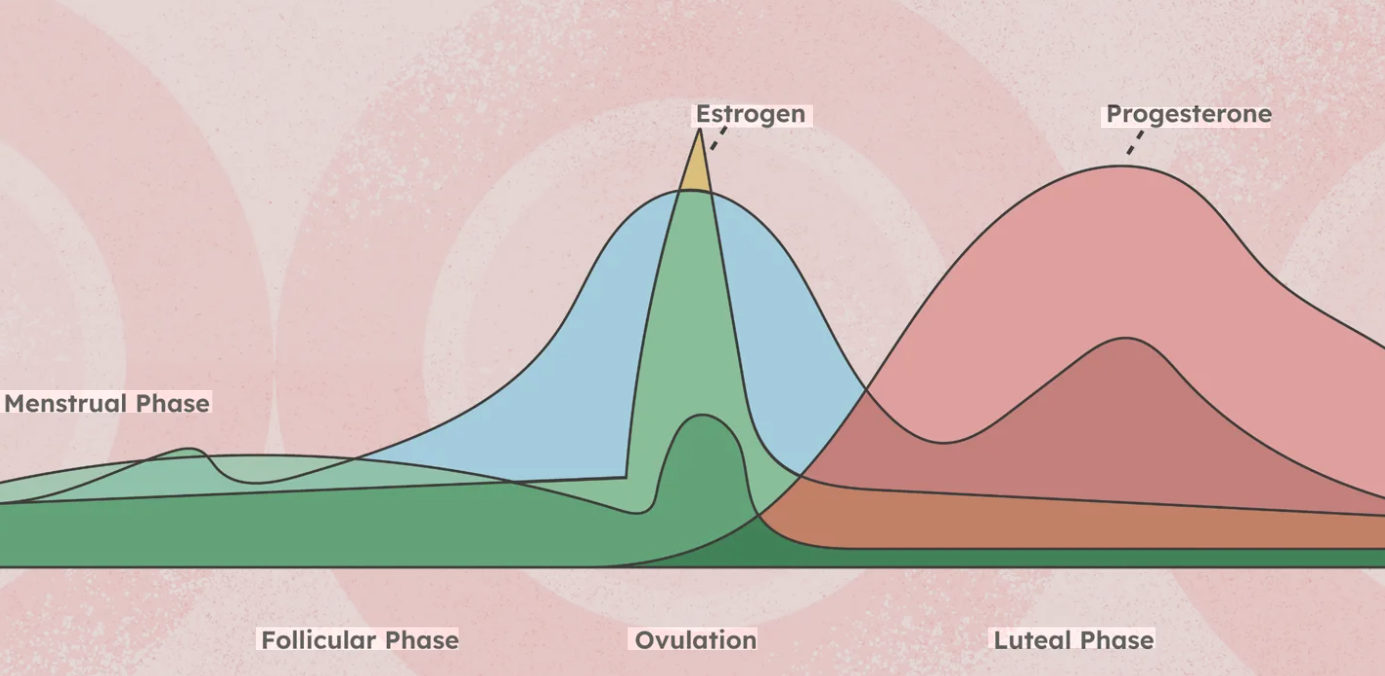
Too many people with uteruses don't know much about their menstrual cycle beyond the bleeding phase, which is just one part of the cycle. Throughout the month, you experience a rise and fall in hormones that directly impact your mood and mental functioning. That doesn't mean you're "crazy," or that your feelings are invalid, or that you're not suited for your job. It means you might have less to give some weeks than others. You may be noticing a theme here: meet yourself where you're at.
10. Sync With the Seasons
This might sound like a stretch, but it's genuinely true: many of us are affected by seasonal change. Plenty of people feel more motivated and inspired in the spring, surrounded by literal growth and renewal. Summer can be exciting and motivating too, as we finally get the vitamin D we were missing over winter (especially in the Northeast). And many of us are affected by winter, when we'd rather curl up and hibernate like the creatures around us. Nothing in nature blooms and produces year-round, so why would we expect that of ourselves?
You might also be sensitive to shifts in barometric pressure — when storms roll in — which can bring headaches or physical discomfort that naturally lowers motivation. Motivation is influenced by nature in more ways than we usually give it credit for.

11. Acknowledge Your Grief
If you've recently (or not so recently) experienced a loss or a major change, it can be hard to keep performing the way you want to. Even when you're not actively thinking about it, grief can operate like a program running in the background, quietly slowing the system down because it's heavier than we realize. Have compassion for yourself, set realistic expectations, allow yourself to grieve, and seek therapeutic support. You don't have to go through it alone, and "not thinking about it" is rarely as effective a strategy as we hope.
12. Mind Your Medication
This one can be so obvious that we miss it. A common side effect of many medications — new or long-standing — is a change in mood or motivation. Inconsistent use can also send you on an emotional rollercoaster. Sometimes we start medication, begin to feel better, and stop taking it because we feel better — not realizing the medication is why we feel better in the first place. Please keep taking it until you've talked to your prescriber. Some medications can eventually be tapered, but that decision should be made with your doctor, not on your own.
If you're on medication and noticing low motivation, it's always worth raising with your prescriber, whether or not it turns out to be related. And even if you're not on medication, let your provider know how you're feeling — they may want to explore your sleep, nutrition, or other physiological factors, like hormonal imbalances.

The Takeaway
Motivation isn't a personal failing, and it isn't something you can white-knuckle your way into on a bad day. It's the downstream result of your mindset, your body, your environment, and everything you're carrying — seen and unseen. The goal isn't to force motivation into existence; it's to understand what's actually getting in the way, and meet yourself there.
If you're noticing a pattern of low motivation that lifestyle changes alone aren't touching — especially alongside grief, big life transitions, or something that feels heavier than it should — that's often a sign it's worth talking to a therapist.
Call or text Renée at Trillergy Mental Health to set up a free 15-minute consultation at (860) 316 - 4428. You don't have to figure it out alone.



Comments